|
|
1 Day Tour Package
|
SH-1 Shanghai City Tour:
|
|
|
|
|
|
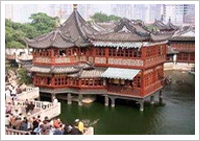
Yu Garden
South of the Bund on the west bank of the Huangpu River, Yuyuan Garden Area is a highly historic area. When the township of Shanghai was originally set up in 1267, this neighborhood has remained the downtown core ever since. The highlights of this area consist mainly of a city temple, a bazaar and a garden. They feature the labyrinth arrangement of lanes and alleyways, the traditional architecture from different periods, ancient folk entertainment, and an aggregation of a large variety of old trades and products.
|
|
|
|
|
|
|
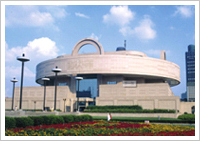
Shanghai Museum
As a museum of ancient Chinese art, Shanghai Museum possesses a collection of over 1000,000 objects, about 120,000 of which are precious national-graded works of art. Its rich and high-quality collection of ancient Chinese bronze, ceramics, painting and calligraphy is specially celebrated in the world.
|
|
|
|
|
|
|
|
|
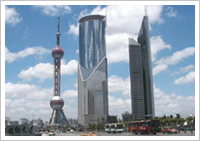
The Oriental Pearl TV Tower
Standing in the bend of the Huangpu River, the Oriental Pearl TV Tower soars 468 meters. As a landmark of the city, three observation levels are located in the three spheres. The highest is at 350 meters in the Space Module. The lower levels are at 263 meters and at 90 meters. A double deck elevator which travels at 4 meters per second and two elevators at 7 meters per second take the visitors to the three levels. Oriental Pearl TV Tower has been hosting over 6000 visitors on a daily average and has become one of the best loved tourist attractions in Shanghai.
|
|
|
|
|
|
|
|
|
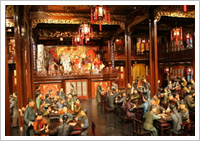
Shanghai History Museum
Shanghai History Museum was established in 1983, which was named Shanghai History & Cultural Relics Showroom at first. In 1991 it was renamed as Shanghai History Museum.
There are more than 30,000 cultural relics collected in Shanghai History Museum, including Shanghai ancient cultural relics and more than 18,000 pieces of Shanghai modern cultural relics (partly are the relics left by the Settlement governors).
|
|
|
|
|
|
|
|
|
The Bund
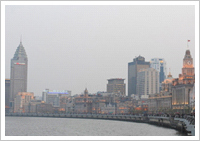
A Shanghai’s icon, the epitome of modern Chinese history, is a panorama of various architecture styles. That’s what usually comes to mind when talking about the Bund. The Bund is the most recognizable architectural symbol of Shanghai. It covers a 1500-meter stretch along the Huangpu River, running from the Waibaidu Bridge to the Shiliupu Passenger Dock, and is described as the Wall Street of China due to its rows of banks and financial institutions.
|
|
|
|
|
|
|
|
|
Nanjing Road
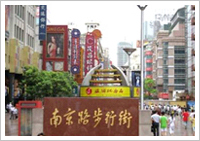
Nanjing Road spills from its eastern terminus on the Bund and past the people’s Square to its western extreme by the newly remodeled Jing’an Temple. Divided into East, Middle and West sections, it’s at times a pedestrian shopping street, a winding tree-lined road, and a modern thoroughfare cutting between some of Shanghai’s most posh hotels.
|
|
|
|
|
|
|
|
|
Tianzifang Lane
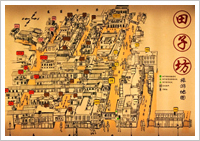
Tianzifang Lane, a new art zone in Shanghai, where you can find special architectures of old Shanghai city as well as a lot of bars, cafes, craft shops, studio, galleries, and boutiques.
|
|
|
|
|
|
|



